Museum of Industrial Types of Ores | VIMS
I am an employee of the N.M. Fedorovsky All-Russian Research Institute of Mineral Resources (VIMS) and I had the opportunity to visit the Museum of Industrial Ore Types.
The following text is taken from the institute’s official website and is accompanied by my photographs of the museum.
The VIMS Lithotechny Fund is a unique collection of samples from more than 600 domestic and international deposits, many of which have already been mined. This collection is a national treasure, contributing to the advancement of knowledge about the formation conditions, material composition, and technological properties of minerals.
The collection of rock and mineral specimens began in 1904. Prominent Moscow entrepreneur and philanthropist V.F. Arshinov (1854-1942), a supplier of cloth to the Russian army, founded the first private research institution in Russia – the Lithogaea Petrographic Institute – for his son, Vladimir Vasilyevich Arshinov (a graduate of the Department of Mineralogy at Moscow University and a student of Academician V.I. Vernadsky).
In 1925, the new building of the institute (then the Institute of Applied Mineralogy) housed the “Museum of Mineral Resource Technology” in a specially equipped 215 m2 room. The museum’s mission was to present rock specimens of all types of mineral resources studied by the institute, demonstrating all stages of extraction and processing of raw materials, and the specific features of domestic and foreign production using diagrams, tables, and charts.
Glass cabinets, display cases, and stands demonstrated the effectiveness of the integrated approach to solving geological and industrial problems developed by the institute’s director, N.M. Fedorovsky—from the deposit and ore, through the processing chains, to the final marketable products.
The museum was based on a large collection of rock samples and transparent thin sections, purchased by V.V. Arshinov in Germany from the renowned German firm of Kranz in 1905 (250 samples with petrographic thin sections). The oldest specimen in this collection is sample 1. No. 665 is a Vesuvius lava erupted in 1856, and the very first museum collection is V.V. Arshinov’s shungite collection, dated 1909.
The first collection of stone material from domestic deposits arrived at the institute in 1911. It consists of rock samples from the Lake Turgoyak region in the Urals (251 specimens), collected by K.I. Viskont during a geological survey.
Collection No. 3, dated 1917, was collected by E.A. Kuznetsov and reflects the petrographic varieties of rocks from the Kyshtym deposit (Urals), which V.V. Arshinov proposed in 1917 as a source for garnet abrasive production.
The museum housed a “Bureau of Minerals,” which was responsible for developing collections for educational institutions, exchanging collectible stone materials with interested organizations, purchasing necessary exhibits, and selling surplus duplicates. The work of the museum and the Bureau of Minerals during those years was highly praised by Academician A.E. Fersman and many other renowned specialists.
The systematic acquisition of collectible stone materials by the institute’s museum, based on the results of fieldwork by its staff, began in 1928.
Following the arrest of N.M. Fedorovsky and several prominent institute employees in 1937, the museum’s activities were suspended. From 1939, the premises of the “Museum of Mineral Resources Technology” were occupied by departments of the USSR State Geological Committee (later the USSR Ministry of Geology) and VIMS itself. Part of the museum’s collections were transferred to the newly established Moscow Geological Prospecting Institute (MGRI). The surviving deed of transfer of museum property from VIMS to the MGRI Museum, dated September 25, 1939, lists 14 glass display cases with stands, models of drilling and mining rigs, and mineral samples from deposits in the Soviet Union, as well as England, Canada, Germany, and Italy (255,865 kg of optical fluorite samples from the Kuli-Kolon deposit (Tajikistan) alone were transferred). These items also included items made of talc-chlorite stone, asbestos, graphite, tuff, diabase castings, labradorite pedestals and columns with capitals, and pedestals made of “Revneva jasper,” all removed from the Cathedral of Christ the Savior. The total number of mineral samples and stone objects transferred was 1,059.
However, the majority of the collected stone material remained within the institute’s walls and has survived to this day. The remaining stone materials were stored in a basement space, poorly suited for storing collections, in the so-called “litoteka.”
Further collections on completed topics were regularly submitted to the litoteka, with a break in 1941-1942, when the institute was evacuated. The litoteka collection includes stone materials on 30 types of minerals, 15 of which VIMS staff are curators for the Ministry of Natural Resources, as well as samples of abrasives, building stone, copper, and other minerals.
Throughout the subsequent years of VIMS’s existence, collections of minerals, ores, rocks, and products of mineral processing, collected by institute staff during fieldwork and office processing, were deposited in the Lithotek.
Lacking a suitable museum space, the Lithotek staff organized thematic exhibitions in temporary display cases, traveled with exhibits of various ores to conferences and other scientific events, systematically recorded the exhibits, and processed reference collections. In the late 1940s and early 1950s, reference collections of uranium ores and minerals were formed from the Lithotek’s collections. These collections were subsequently displayed at international conferences in Geneva and India.
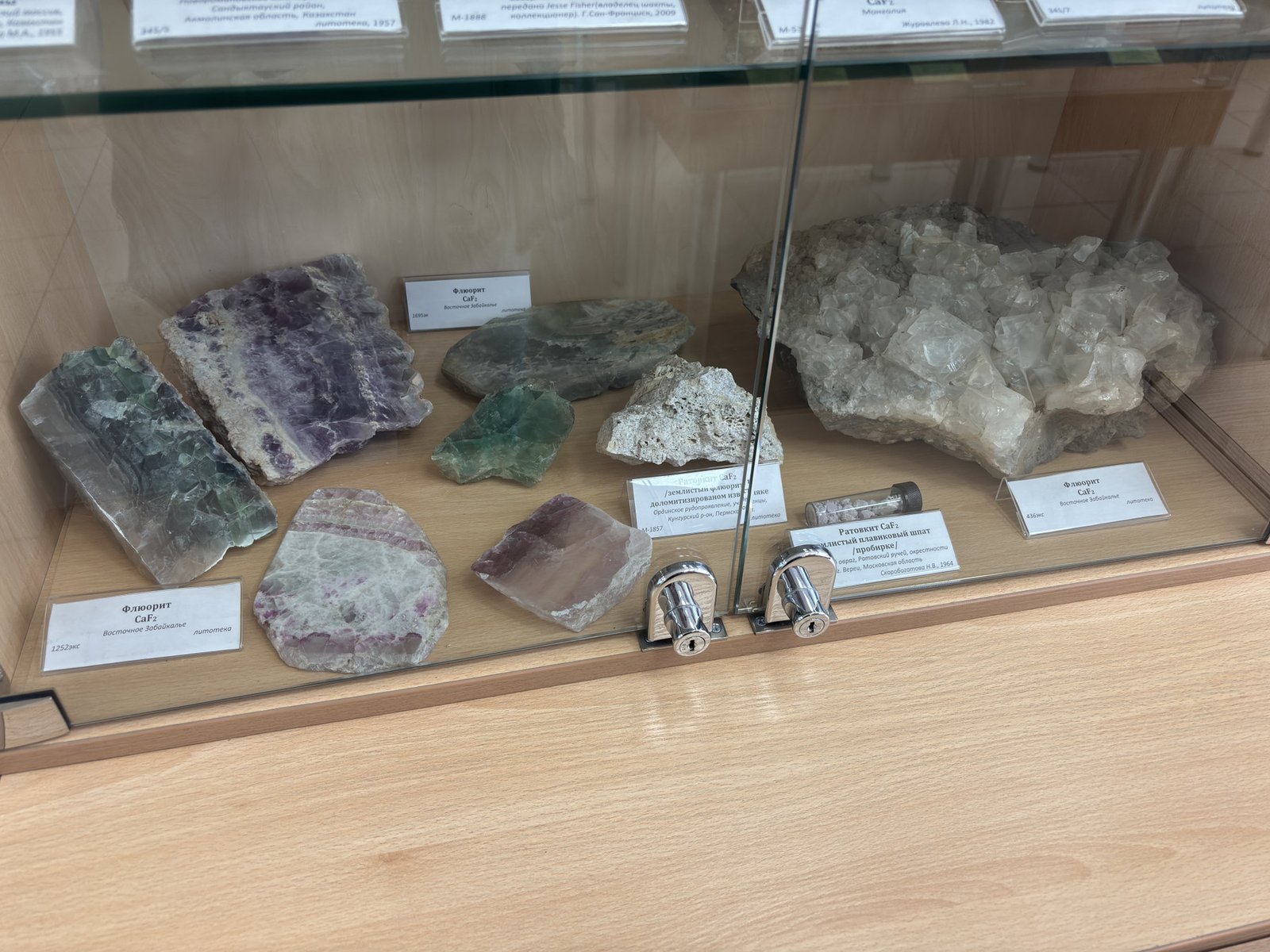
In 2007, VIMS management secured funds to recreate a full-fledged exhibition space. On October 27, 2007, the “Industrial Ore Types Exhibition” opened on a 260-square-meter space during the international conference “Mineral Resource Base of Ferrous, Alloy, and Non-Ferrous Metals in Russia and the CIS: Problems and Development Paths.” The extensive exhibit, the result of the work of the entire team, clearly showcases samples of ores, rocks, and minerals from leading industrial deposits of Fe, Cr, Mn, Ti, Zr, Sn, W, Mo, Ta, Nb, Li, Cs, Be, Al, B, fluorspar, and mica (muscovite and vermiculite). Ore samples by deposit are arranged according to the State Reserves Committee’s geological and industrial classification for each element, approved by Order No. 37-2 of the Ministry of Natural Resources of Russia dated June 5, 2007.
The exhibition on ferrous, non-ferrous, and rare metals, as well as non-metallic minerals, is based on a geological-industrial classification system and does not duplicate the geological museums of Moscow and St. Petersburg.
The exhibition reflects the core principle of the integrated method of deposit assessment applied by N.M. Fedorovsky—the study of deposits from prospecting and exploration to a detailed analysis of the mineral composition of ores, the development of a process flow chart for their enrichment, the processing of concentrates, and the economic assessment of deposits.
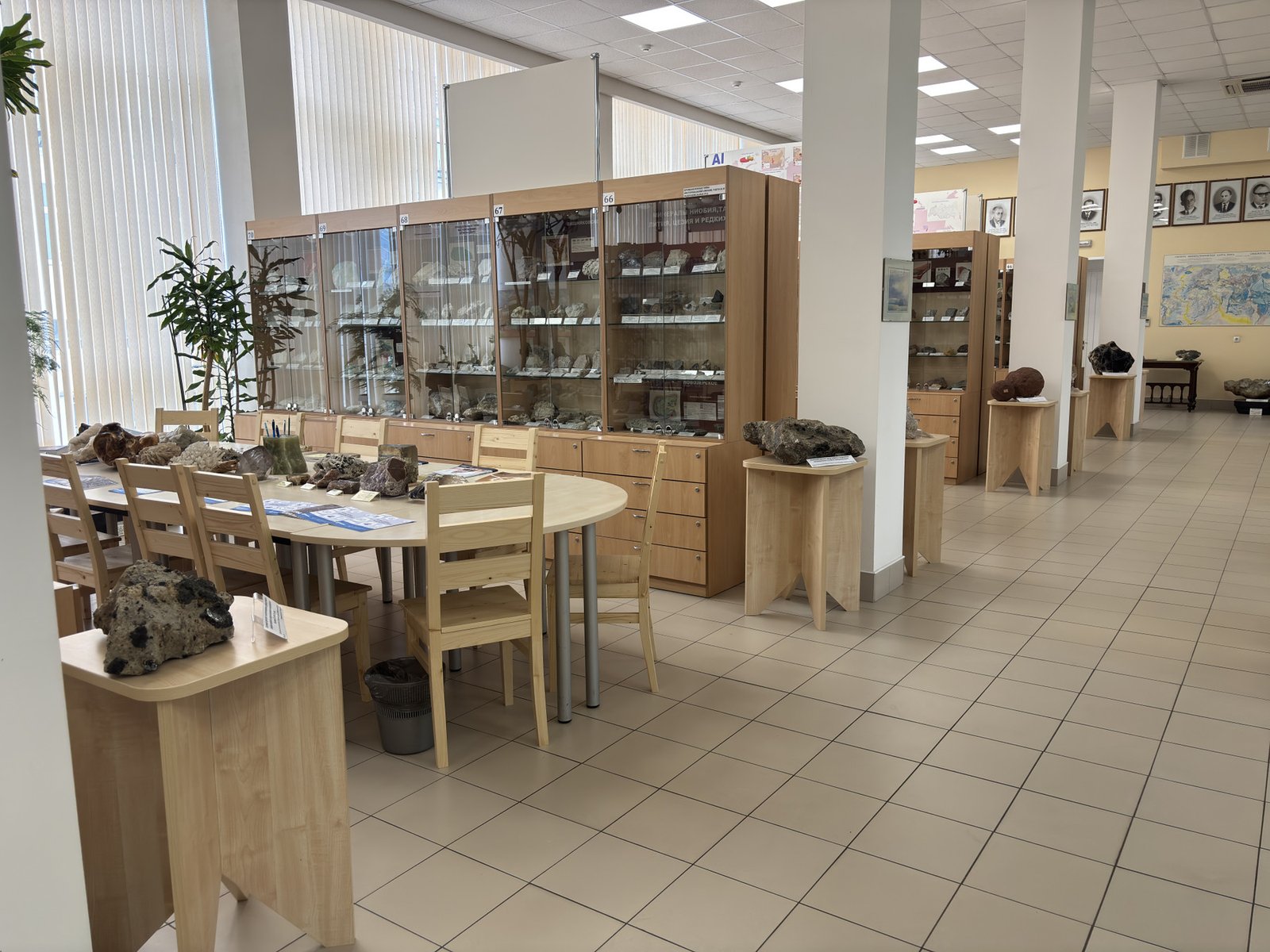
The exhibition opens with a gallery of portraits of many renowned geologists—former VIMS employees who made significant contributions to identifying the main sources of the country’s mineral resource base, as well as a number of prominent scientists currently working at the institute.
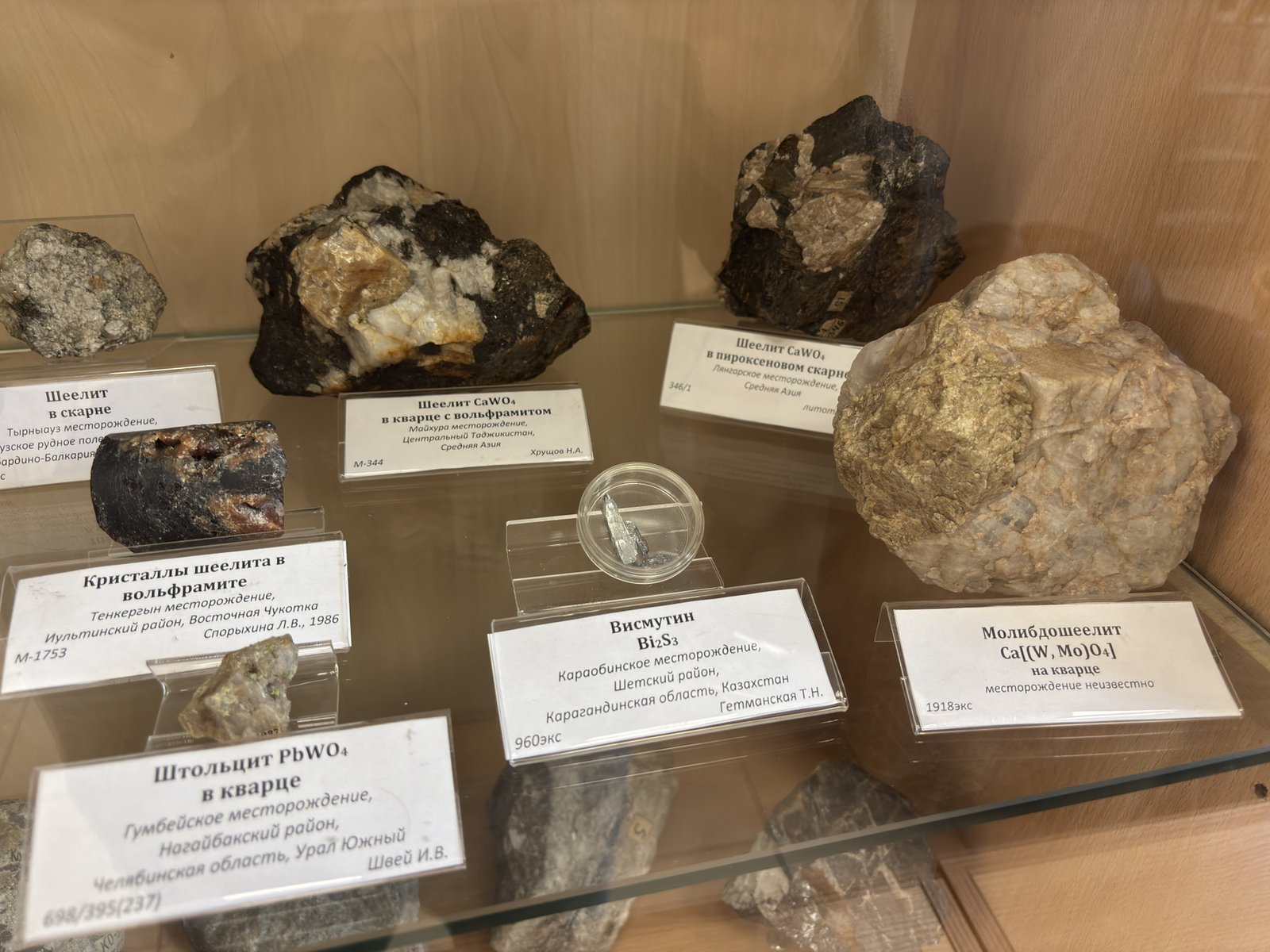
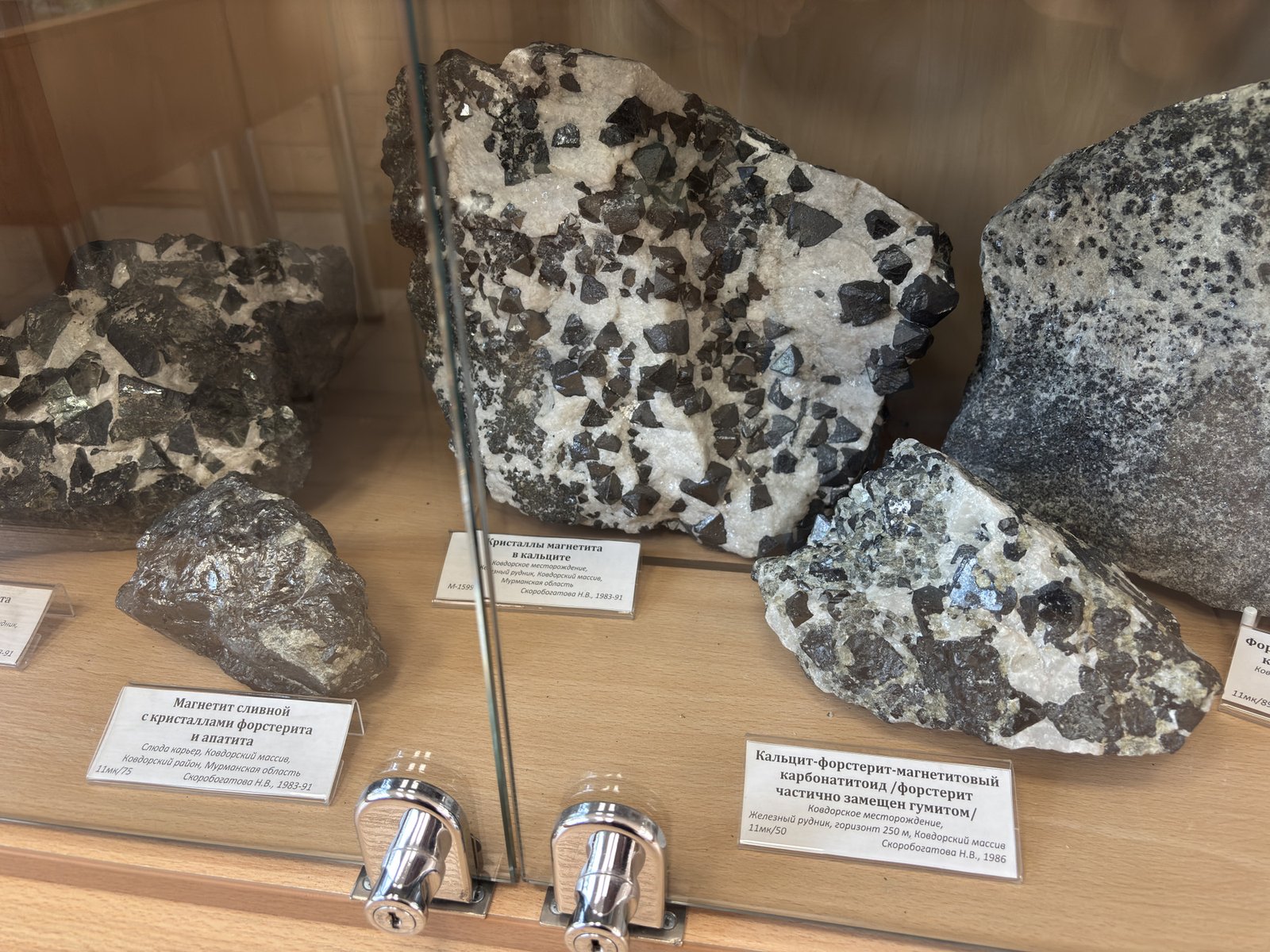
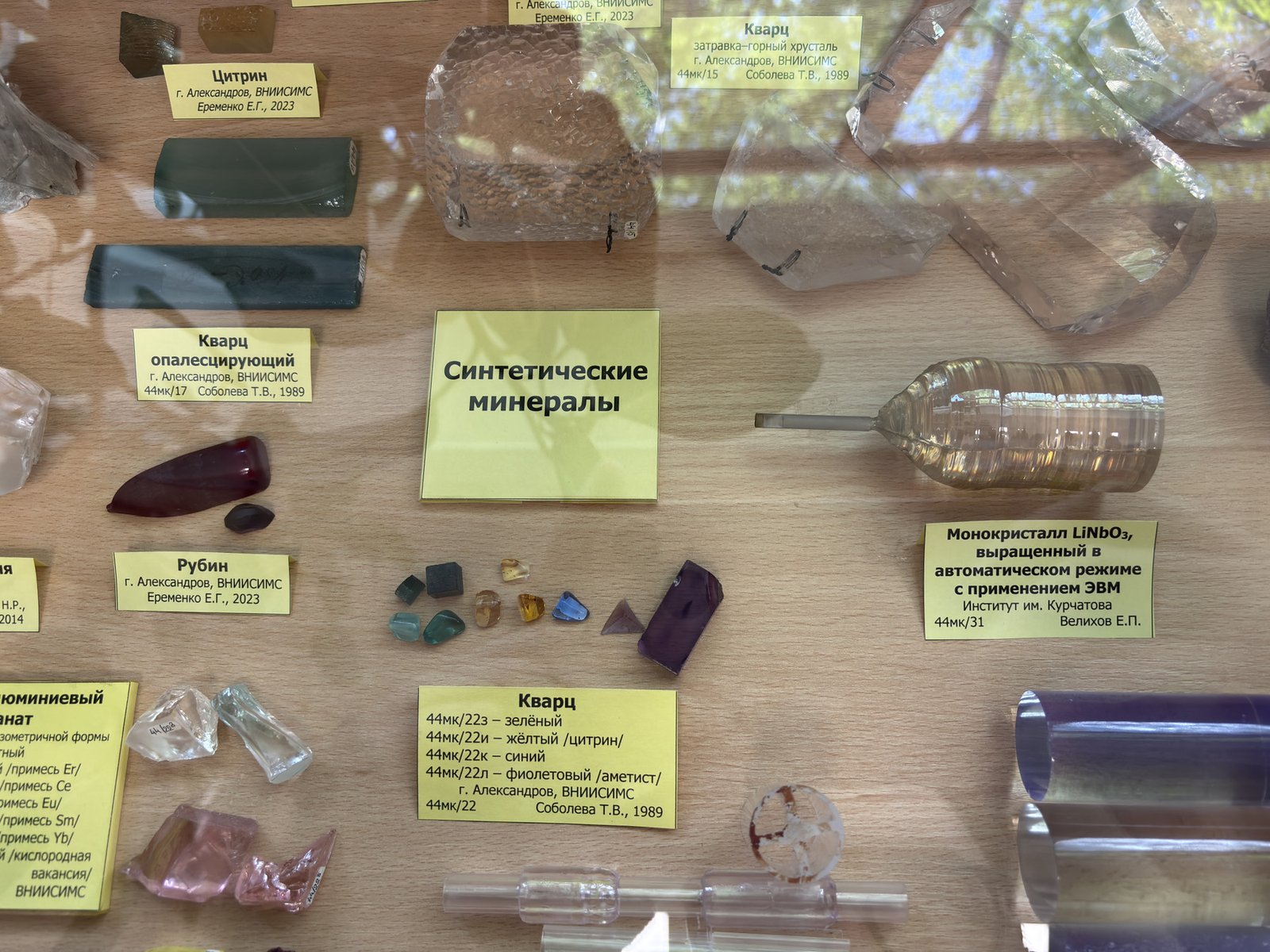
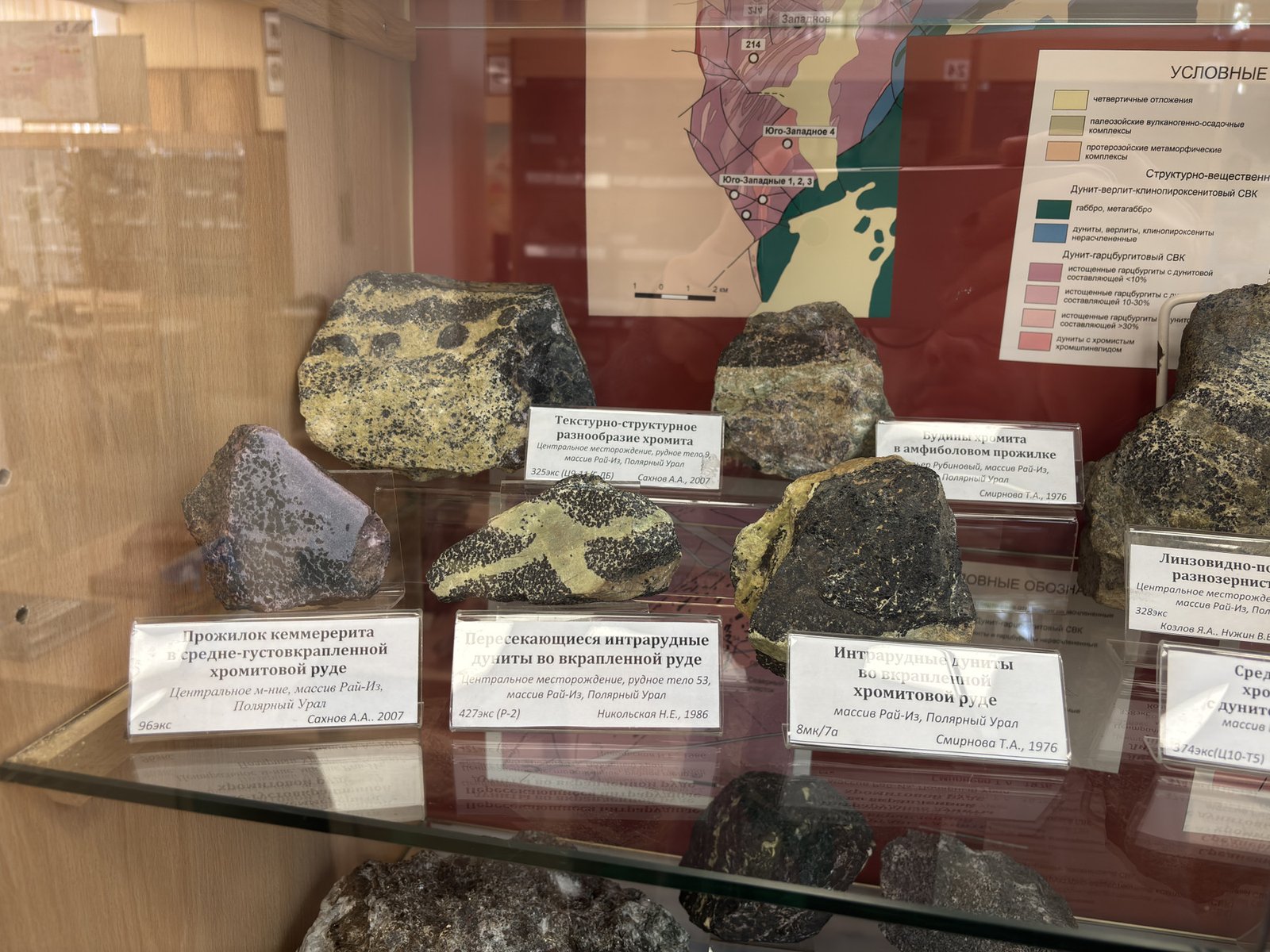
Further along both sides of the spacious, bright hall, 80 display cases house more than 5,000 specimens illustrating the diversity of ores by industrial types of solid ore and non-metallic mineral deposits.
Above the display cases for each element, a large display board is located, showing ore districts against a schematic map of Russia. Insets show metal reserves by geological-industrial type and their share in the reserves. Deposits are indicated on the map, and the color of the circle under the deposit’s name indicates its geological-industrial type.
For individual raw materials (such as manganese), a pie chart is provided, characterizing reserves and production by republic and region, the element’s share by industrial type of raw material, a histogram of metal content in ores by deposit genetic type, production by ore type, production and import trends, and the ratio of ore types in CIS country reserves.
For some elements, additional information is provided in tabular form. Thus, when characterizing alumina ores, the names of the main bauxite deposits are given, along with their reserves and the Al2O3/SiO2 ratio (siliceous modulus), while for the main nepheline deposits, the reserves and Al2O3 content of the ores are indicated.
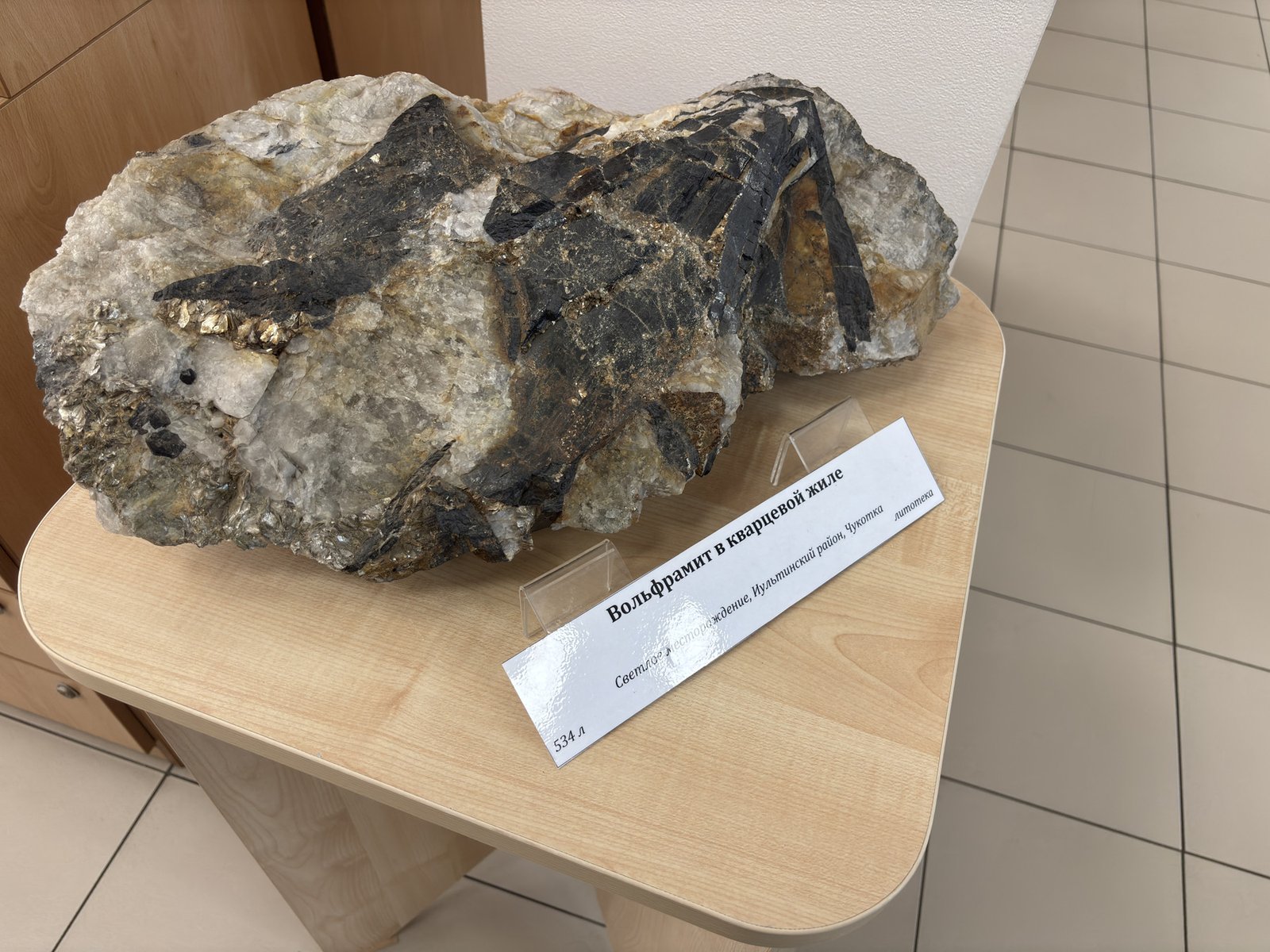
The exhibition on a particular element begins with representative samples of the most important minerals, labeled with the mineral’s chemical formula, sampling location, author, and year.
In display cases, ore samples from the most important industrial deposits are displayed against a backdrop of schematic geological maps and cross-sections, along with diagrams and tables. Additional materials (samples, thin sections, and ore processing products) are housed in drawers beneath the display cases.
This exhibition not only allows visitors to become familiar with existing industrial deposit types but also explore new technologies for processing unconventional raw material sources.
The polishing collection allows for microscopic assessment of the structural features of ores and their relationship with host rocks.
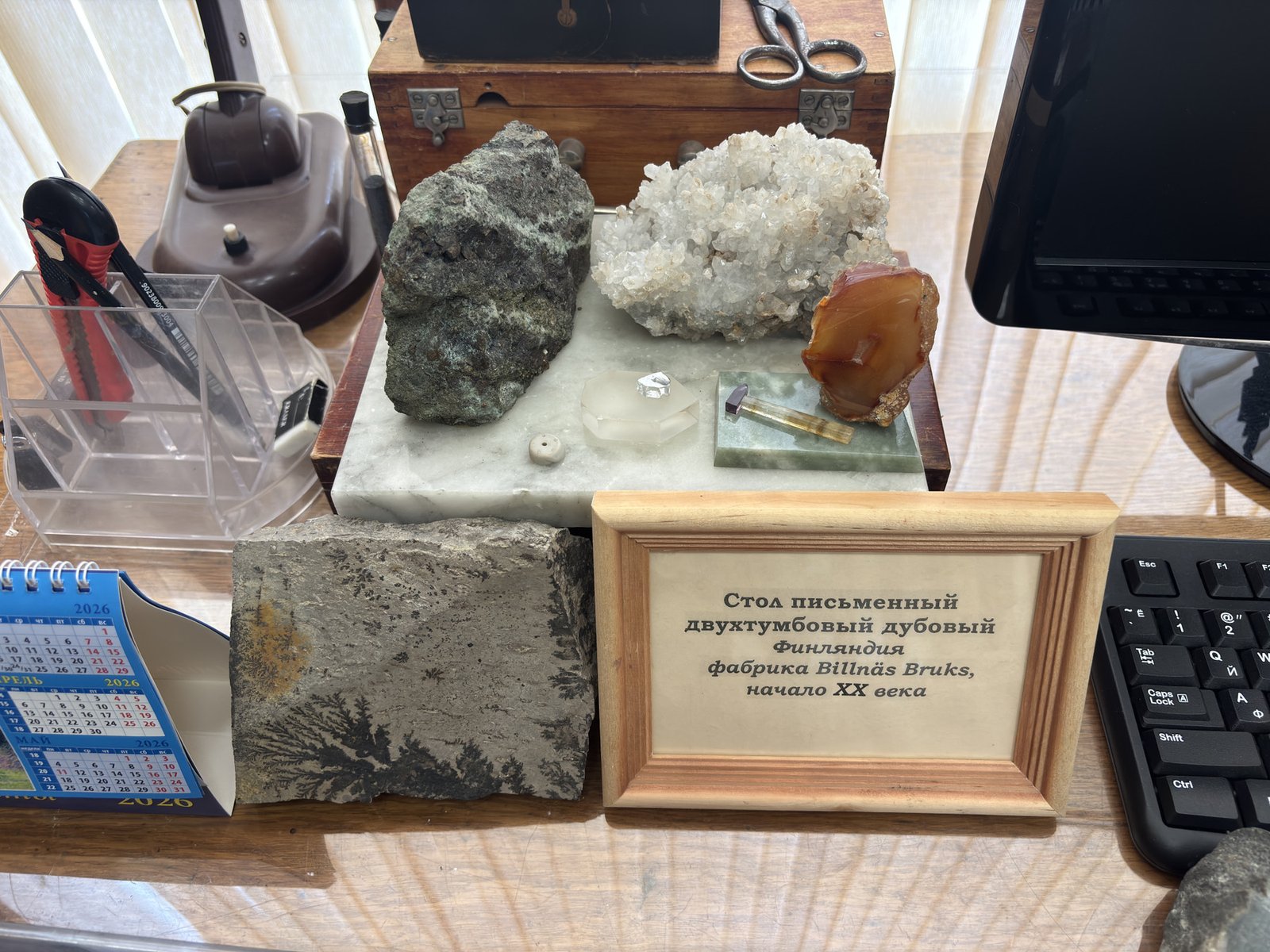
The equipment available—microscopes, binoculars, and a fluorescent lamp—installed in the hall facilitates work directly adjacent to the exhibit. Here, visitors can also view examples of ore processing and specific products for all types of raw materials studied by VIMS. These are accompanied by specific ore processing flow charts.
The samples in the lithotek collection are primarily reference and analyzed, and therefore the lithotek can be considered a unique data bank—a repository of geological and scientific information. The rock material characterizes both surface and deep horizons, as it was collected by VIMS staff during exploration work that exposed the entire ore body.
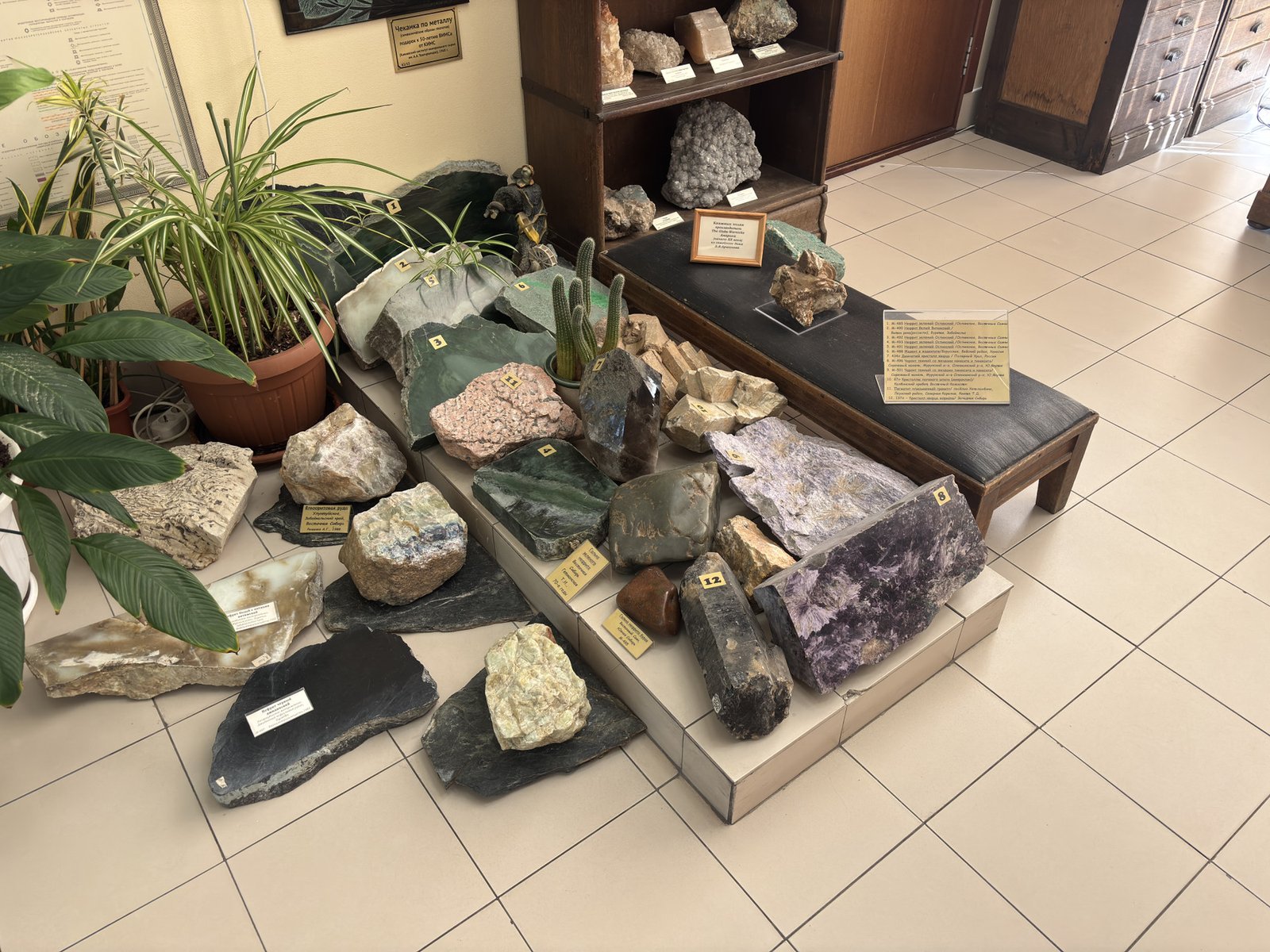
The VIMS lithotek contains collections of mineral samples from hundreds of occurrences and deposits in the former USSR, including both commercial and potentially commercial deposits. A number of collections are of historical value. Many of them introduce previously inaccessible sites abroad, while others reveal sites that have already disappeared from the face of the Earth during the mining of geological bodies.
New exhibits are currently arriving from recently discovered mining sites in the Polar Urals, Siberia, and the Pacific Ocean (manganese nodules). A large team of institute staff—geologists, mineralogists, technologists, mineralogists, mineral processing specialists, chemists, and economists—is working on the study and evaluation of new raw materials.
Geological samples are the only primary source of information about the geological processes that took place on Earth millions of years ago and continue to this day. Undoubtedly, this exhibition is of great assistance not only to our institute but is also widely used in the educational process at the branch of the Department of Geology of Mineral Deposits of the Russian State Mineral Resources University (RSGRU) at VIMS.
It is indispensable for undergraduate, graduate, and young industry professionals taking their first steps in understanding ore geology.
Over the course of its century-long history, the institute’s staff has discovered 125 new minerals, which are also included in the exhibition.
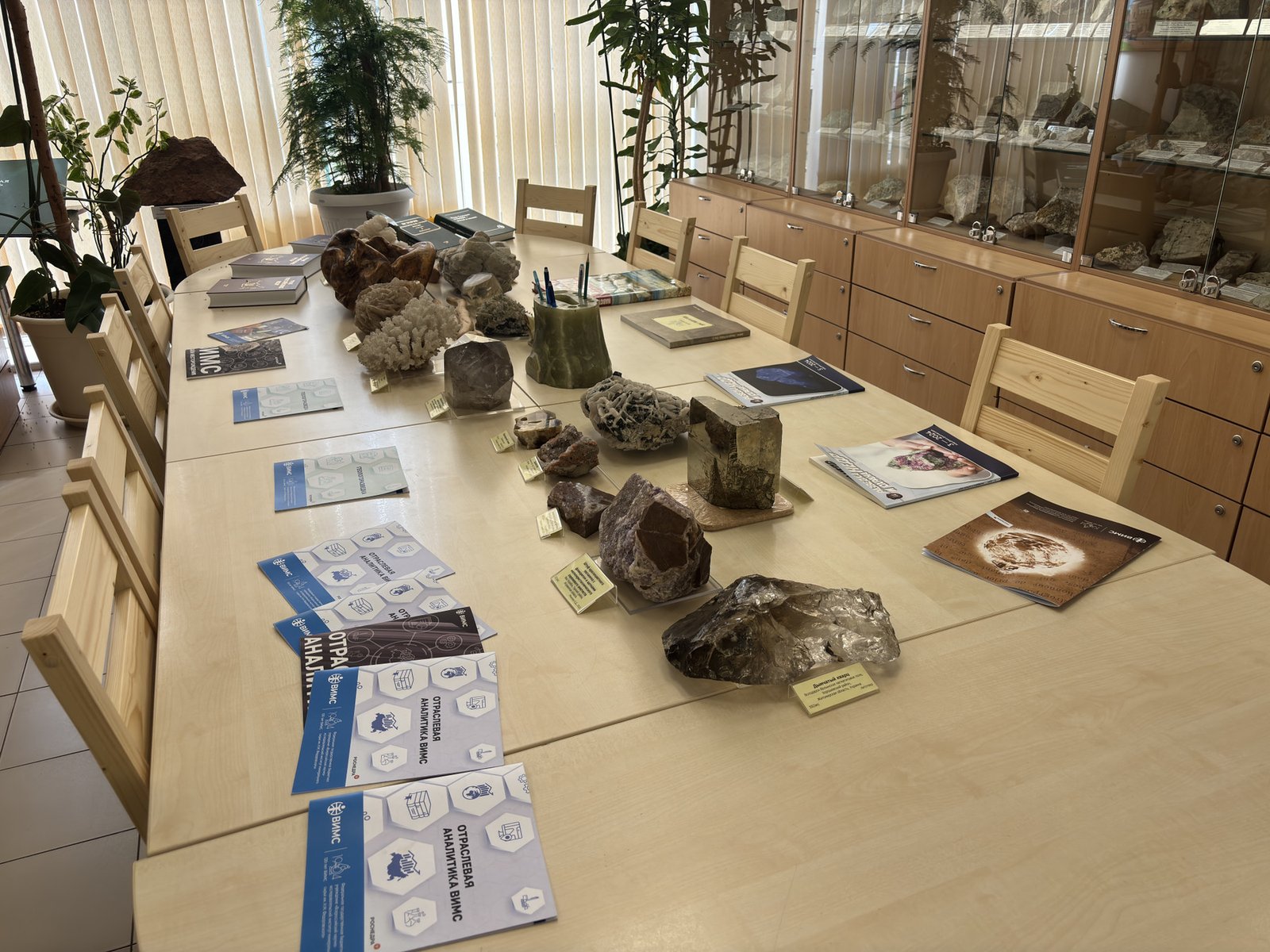
The most valuable and unique collections of the lithotheca collection include:
Endogenous and exogenous boron deposits (438 samples—10 collections). Uranium Deposits of the Former USSR — The Geneva Collection - 498 samples (a collection of uranium ores and minerals) displayed at the First International Conference on the Peaceful Uses of Atomic Energy in Geneva in 1955. Collection of Luminescent Minerals (No. 43) - 125 samples, 61 mineral species; Bauxites from Geosynclinal and Platform Deposits of Russia and the CIS Countries - 700 samples; Ore-Bearing Carbonatite Complexes of the Ultramafic, Ijolite, and Fenite-Miaskite Formations - 1,324 samples (25 collections); Rare-Metal (Ta, Nb, TR, Hf, Zr, Sc, Li, etc.) Alkaline Quartz-Albite and Quartz-Albite-Microcline Metasomatites - 893 samples (17 collections); Genetic and industrial types of beryllium deposits in Russia and the CIS — 1,204 samples (44 collections); Iron ores of iron ore formations in Russia and the CIS — 1,842 samples (35 collections) Currently, the total number of items stored in the lithotec exceeds 100,000 items, including 126,000 samples and 31,000 thin and polished sections. The exchange collection contains over 37,000 samples. Almost nine years have passed since the exhibition opened. The exhibition’s attendance and interest clearly indicate that it was organized in a timely manner—veterans (geologists, mineral processing specialists, and economists) are still working on the exhibition, capable of passing on their experience to younger colleagues.
The exhibition of industrial ore types is constantly expanding its display and maintains active creative ties with other geological institutions, enterprises, organizations, and museums. The sample collections are regularly used for unique research using the latest technology.